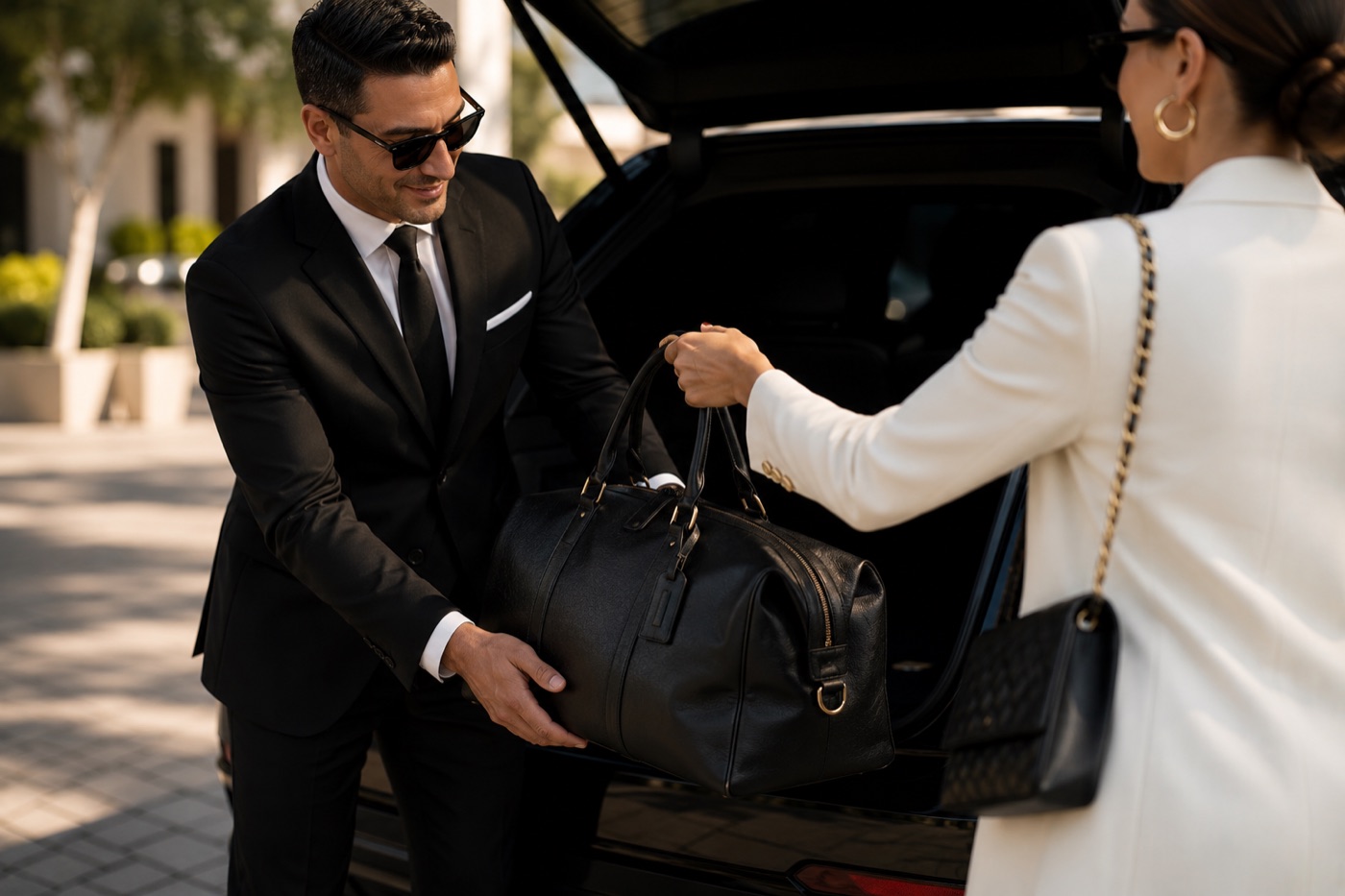
A multi-vehicle plan needs more than a headcount. Assign each traveler or subgroup to a vehicle, identify every pickup and arrival time, and choose one coordinator who can handle a late flight or event change. Confirm the actual vehicle and luggage requirements before the day of service.
Start with a passenger manifest
List each passenger group, pickup address, destination, traveler contact and luggage. Keep private contact information with the coordinator rather than on a broad event schedule. If an executive and a larger party need different arrival times, show that explicitly; one master arrival time can hide important operational differences.
Separate children, mobility needs and unusually large equipment into the planning brief. These are assignment inputs, not details to discover when cars reach the curb.
Build the timing and handoff plan
For an airport group, flights may arrive at different terminals or at different times. Set a clear rule for who waits, who proceeds, and how the coordinator learns that a traveler is ready. At an event, define a permitted pickup point, the expected departure wave and a backup contact if the group splits after the event.
Staggered vehicles can reduce congestion when a venue or hotel cannot accept several cars at once. Confirm the final approach with the venue or airport where needed; this guide does not grant access to restricted loading areas.
Communicate one change to everyone it affects
Use a current manifest version and communicate changes to the transport coordinator, the affected guest and the on-site contact. A flight delay affecting one car should not silently change all assignments. If a passenger moves to another vehicle, update the seating and luggage plan too.
Discuss complex multi-car needs before assuming the standard one-vehicle booking flow can coordinate them. CORBEAU can review group and event requirements through the contact channel.
Assign seats, bags and responsibility
Number the vehicle assignments in the planning sheet, then attach named passengers and the correct luggage to each one. A lead guest should be identified for each car, and one overall coordinator should hold the full manifest. If a guest changes vehicles, update both passenger and bag assignments so the departure count still reconciles.
Keep the manifest practical: pickup address or terminal, planned ready time, destination, lead phone and any special loading needs. Do not distribute the entire private guest list to everyone involved in an event. The chauffeur needs the details for the assigned vehicle; the coordinator needs the overall picture.
Design arrival and departure waves
Staggered flights require a decision about whether an early group proceeds or waits. Hotel departures may need a loading sequence because several vehicles cannot occupy one entrance at once. For an event, distinguish arrival order from return order; the people leaving first may not be the first to arrive.
Before a venue day, verify current permitted loading areas and any onsite contact. Agree on one alternative communication plan if mobile service becomes unreliable. A venue or airport may change traffic control during the event, so the coordinator should confirm the final meeting instruction rather than promise a curb from an old map.
Handle exceptions without losing the group
A late flight, absent guest or changed destination should trigger a focused update: which car is affected, who is now aboard, what luggage moved, and who has been notified? Avoid broadcasting an unclear “all cars delayed” instruction when only one assignment changed. Record the new version so each guest receives one coherent plan.
For a complex group request, discuss the manifest and timing with the transport provider before treating several independent bookings as a coordinated operation. This is planning guidance, not a claim that any particular venue, airport or provider will reserve staging space.
Run a final assignment rehearsal
Read the plan from the perspective of each traveler: where do I board, which vehicle is mine, who has my bag, and where do I meet after the event? If two people would answer the same question differently, the manifest is not ready. A coordinator can catch these mismatches before the first vehicle reaches a hotel or terminal.
Confirm the departure sequence with the location that controls access. A vehicle might be ready while its guests are still inside a venue, or a guest might be outside while the assigned car must approach from a different street. Build a communication handoff rather than assuming every party can appear at one curb simultaneously.